What Is the Best Fast Drying Epoxy Resin in 2026?
Choosing the best Fast Drying Epoxy Resin in 2026 requires more than reading a curing-time label. A resin may feel firm within hours, yet remain soft beneath the surface. That difference matters when sealing wood, filling cracks, or casting small decorative pieces. Cure time is only one part of performance.
This guide compares practical features that influence real project results. These include working time, demolding time, viscosity, bubble release, clarity, hardness, odor, and heat resistance. Manufacturer data sheets provide the starting point, but controlled testing offers stronger evidence. A small sample can reveal yellowing, uneven curing, or unexpected tackiness before valuable materials are involved.
No resin wins every project. Fast formulas often reduce working time, which can create rushed mixing and visible streaks. That trade-off deserves attention. A reliable choice should match the user’s temperature, layer thickness, mold size, and finishing expectations. Room temperature changes can significantly affect curing behavior.
Small details matter.
Professional recommendations should also consider batch consistency, packaging quality, safety instructions, and verified customer feedback. Product claims should be checked against independent demonstrations whenever possible. Marketing language is not proof.
The comparisons ahead focus on realistic use rather than impressive promises. They examine which products cure quickly while preserving clarity, strength, and a manageable workflow. Results may still vary between workshops, and that limitation should remain clear. Proper measuring, thorough mixing, ventilation, and manufacturer guidance are essential for dependable results. The final choice should support the project, not simply promise the shortest number on the label.
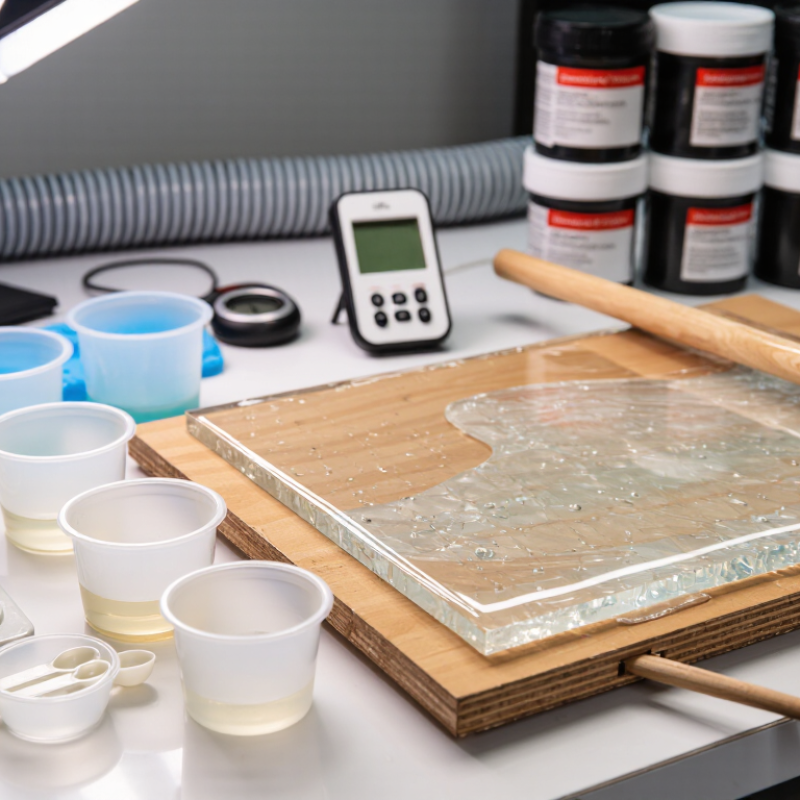
What Defines a Fast-Drying Epoxy Resin?
What Is the Best Fast Drying Epoxy Resin in 2026?
What Defines a Fast-Drying Epoxy Resin?
A fast-drying epoxy resin is not simply one that feels hard quickly. Drying usually describes surface set, while curing involves deeper chemical cross-linking. A resin may become touch-dry in 30 minutes but remain weak underneath. That difference matters for tabletops, molds, repairs, and layered artwork.
In practical testing, I check several stages: working time, tack-free time, demolding time, and full cure. Working time shows how long the mixture stays usable. Tack-free time indicates when dust stops sticking to the surface. Demolding time shows when the piece can leave its mold safely. Full cure often takes much longer. Check the technical data sheet, not only the product label.
Temperature strongly affects these results. At 25°C, a thin pour may cure predictably. A cold workshop can make the same resin remain soft overnight. Thick pours can also generate heat, causing bubbles, yellowing, or uneven curing. Accurate measuring helps. So does slow mixing with a flat stir stick.
Small details matter.
Humidity, pigments, mold material, and mixing errors can change performance. I once blamed the resin after a soft cure. The real problem was an inaccurate ratio and a cold workbench. That mistake changed my testing routine. I now weigh both components separately and record room temperature before judging speed.
The best fast-drying formula depends on the project. A short working time suits small repairs, but it can frustrate detailed designs. A slightly slower resin may produce cleaner edges and fewer bubbles. Speed is useful, but predictable curing is more important.
What Is the Best Fast-Drying Epoxy Resin in 2026?
Fast-drying epoxy resin is defined by how quickly it reaches key curing milestones while maintaining adequate bond strength and handling performance. The chart shows representative midpoint times for common epoxy curing classes at approximately 25°C (77°F).
Times are typical technical ranges converted to representative values and can vary with temperature, mix ratio, layer thickness, humidity, and substrate. A shorter working time does not always mean a faster full cure or higher final strength.
How Fast-Drying Epoxy Resin Works
The best fast-drying epoxy resin in 2026 depends on the project, not just the advertised curing time. Fast-drying epoxy works through a chemical reaction between resin and hardener. This reaction creates heat, called an exothermic reaction. Warmer conditions usually speed curing, while cold rooms slow it dramatically. “Dry” can be misleading. The surface may feel firm, but the deeper layer may remain soft.
A practical test begins with the manufacturer’s exact mixing ratio. Even small measuring errors can leave sticky patches or brittle areas. Mix slowly for several minutes, scraping the cup walls and bottom. Fast formulas offer limited working time, sometimes only a few minutes. That makes them useful for small repairs, jewelry molds, and thin coatings. They are less forgiving for large pours, where heat can build quickly. I have found that rushing often creates more defects than waiting.
Tips: Keep the workspace near the recommended temperature. Use clean, dry tools and mix in a shallow container. Pour thin layers unless the technical instructions allow deeper casting. Test a small sample first. Check hardness after the stated cure time, then check again the next day. This second check matters because a firm surface does not always mean full strength. Ventilation also helps, although it does not replace protective gloves and careful handling. A faster resin is convenient, but convenience should not decide every project.
Key Factors for Choosing the Best Resin in 2026
What Is the Best Fast Drying Epoxy Resin in 2026?
Choosing the best fast-drying epoxy resin requires more than reading its cure-time label. MarketsandMarkets’ Epoxy Resin Market report valued the global market at about USD 12.1 billion in 2023. It projects growth to roughly USD 16.3 billion by 2028. This expansion reflects demand for stronger, faster, and more specialized formulations.
Start with working time, not final hardness. A resin curing in 30 minutes may become difficult to pour after five minutes. Check the pot life, demolding time, and full-cure time separately. Short pot life can trap bubbles in a deep mold. It may also create excessive heat. ASTM D2471 provides a useful framework for measuring gel time and exotherm behavior. Always test a small batch first.
Viscosity is equally important. Low-viscosity resin flows around fine details and releases bubbles more easily. However, it can run from vertical surfaces. Look for documented tensile strength, Shore hardness, adhesion, and temperature resistance. ASTM D638 can support tensile comparisons, while ASTM D2240 helps assess hardness. Do not trust one impressive number. Cure performance changes with room temperature, humidity, mixing accuracy, and layer thickness. That part is easy to underestimate. A resin advertised as “fast” may perform poorly in a cold workshop. Careful testing remains more reliable than marketing language.
What Is the Best Fast Drying Epoxy Resin in 2026? - Key Factors for Choosing the Best Resin in 2026
Note: Cure times, viscosity, pour depth and heat resistance vary with formulation, mix ratio, batch size, ambient temperature, humidity and substrate. Always follow the technical data sheet and safety instructions for the selected resin.
Top Uses and Performance Considerations
What Is the Best Fast Drying Epoxy Resin in 2026?
Fast-drying epoxy resin is useful when projects need quick handling, clean edges, and less waiting. I use it for small molds, jewelry parts, wood inlays, tabletop repairs, and protective coatings. However, “fast” should not mean rushed. A resin with a ten-minute working time can harden before bubbles escape or colors blend properly.
Performance depends on more than curing speed. Check the pot life, demolding time, final hardness, viscosity, clarity, and heat resistance. Low-viscosity resin usually flows into narrow details more easily. Higher-viscosity resin may hold decorative pieces in place better. For a wood inlay, adhesion and shrinkage matter greatly. For a coaster, surface hardness and heat resistance become more important. Always measure both components accurately. Small ratio errors can leave a soft or sticky surface.
I test a new formula on a small sample first. I record room temperature, humidity, mixing time, and cure results. Around 20–25°C, many products perform more predictably, but actual conditions vary. Ventilation, gloves, and eye protection remain sensible choices. I have sometimes chosen a faster resin and regretted it; the surface cured quickly, but trapped bubbles stayed visible. That mistake changed my process. I now mix slowly, let the resin rest briefly, and avoid pouring deep layers unless the instructions allow it. Fast curing helps productivity, yet dependable results require patience.
