2026 Best Patio Entry Door Types for Global Buyers
Choosing the right Patio Entry Door in 2026 requires more than comparing colors, glass sizes, and catalog prices. Global buyers face different climates, building traditions, security expectations, and installation conditions. A coastal home may need corrosion-resistant hardware and sealed frames. A dry, sunny region may demand low-emissivity glass and strong ultraviolet protection. Cold climates often benefit from insulated panels, tight weather seals, and carefully fitted thresholds.
Looks matter. Performance matters more.
This guide examines the leading patio entry door types, including sliding, French, folding, and pivot designs. Each option creates a different balance between opening width, ventilation, privacy, and everyday convenience. Sliding doors save interior space, but their tracks need regular cleaning. French doors provide a familiar, elegant opening, although their swing area may restrict furniture placement. Folding systems can connect a room with a garden, yet their hardware and installation require careful attention.
Real product research also means reading specifications, not trusting impressive photographs. We consider frame materials, glass construction, drainage, locking systems, thermal performance, accessibility, and replacement support. Manufacturer documentation and advice from qualified local installers remain essential, especially when regional weather and construction methods differ.
No door is perfect.
Some recommendations may change after a site inspection. That is worth admitting. A premium system can still perform poorly when the opening is uneven or the drainage is ignored. Buyers should compare tested performance, maintenance needs, warranty clarity, and long-term service availability. The strongest choice is not always the most expensive one. It is the door that fits the building, climate, budget, and daily habits with fewer compromises.
Patio Entry Door Basics and Key Selection Criteria for Global Buyers
Patio entry doors connect indoor comfort with outdoor living, but they also face rain, wind, sunlight, and daily traffic. Common options include hinged, sliding, and folding doors. Hinged doors usually provide a strong seal and familiar operation. Sliding doors save floor space but need clean tracks and precise rollers. Folding systems create wider openings, yet their hardware demands careful installation.
Selection should begin with climate, wall structure, and opening size. In hot regions, lower solar heat gain can reduce unwanted indoor warming. In cold regions, a lower U-factor generally supports better insulation. The U.S. Department of Energy reports that windows can represent 25–30% of residential heating and cooling energy use, showing why glazed doors deserve serious attention. The International Energy Agency also reports that buildings consume about 30% of global final energy. Small performance differences matter.
Look for independently verified U-factor, solar heat gain coefficient, air-leakage, and water-resistance data. Testing references from organizations such as the National Fenestration Rating Council can improve comparison reliability. Check frame materials, drainage paths, multipoint locks, tempered safety glass, and accessible thresholds. A beautiful door can still perform poorly after incorrect fitting. Measure the opening twice. Confirm local wind, rain, and thermal requirements before ordering. Even experienced buyers can overvalue appearance; long-term maintenance is easy to underestimate.
Major Patio Entry Door Types and Their Defining Features
Patio entry doors shape how a home connects with its garden, terrace, or balcony. Their design affects daylight, ventilation, security, and daily traffic. Sliding patio doors move along horizontal tracks, making them useful where indoor space is limited. Large glass panels create broad views, but tracks need regular cleaning to prevent rough movement. Proper drainage is essential in rainy climates.
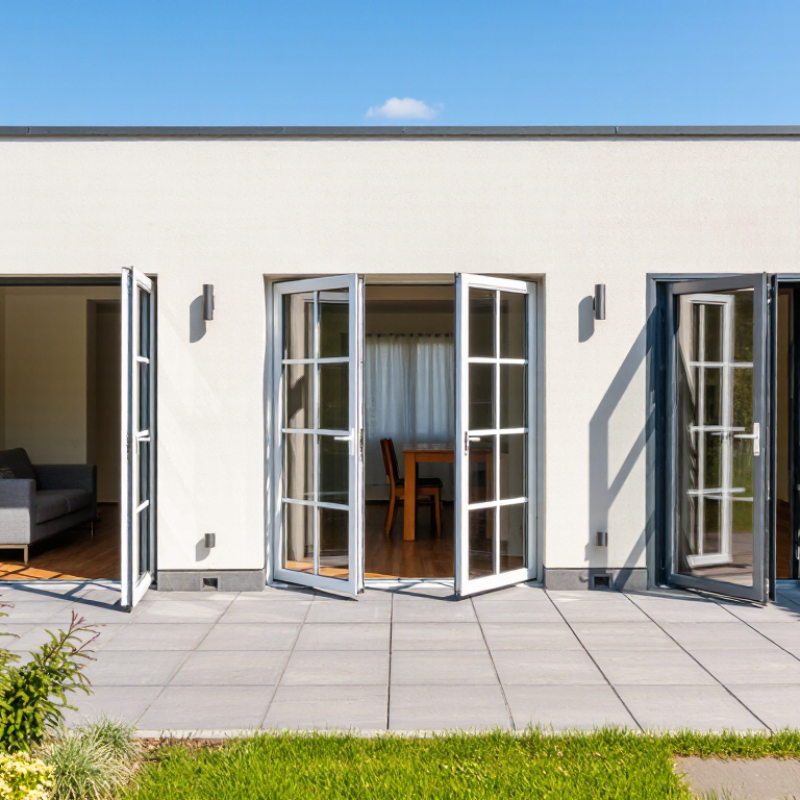
French patio doors use hinged panels that swing inward or outward. They offer a familiar entry feel and can provide strong ventilation when both panels open. However, they require clear floor space, which may conflict with furniture or narrow terraces. Multi-panel bi-fold doors fold toward the sides, producing a wide opening for entertaining. Their hardware is more complex, so accurate installation and periodic adjustment matter. They can also lose some thermal performance if the frame has many joints.
Pivot patio doors rotate on specialized hinges rather than conventional side hinges. They suit large architectural openings and create a dramatic entrance. Their weight demands careful structural planning. In coastal or humid regions, buyers should examine corrosion-resistant hardware, sealed glazing, and frame materials. Energy performance also depends on glass coatings and weather seals, not appearance alone. Bigger is not always better. I have seen attractive doors become inconvenient when handles, thresholds, or screens were poorly coordinated. Local installers should verify opening sizes, wind exposure, water management, and accessibility needs before ordering. My own preference changes by project, because a visually impressive door can still perform poorly in real weather.
2026 Best Patio Entry Door Types for Global Buyers
Major Patio Entry Door Types and Their Defining Features
Patio door selection depends on available wall width, ventilation needs, weather exposure, accessibility, and desired indoor-outdoor connection. Sliding doors suit compact spaces, hinged French doors provide a traditional entry feel, folding systems create wide openings, and multi-slide or lift-and-slide systems maximize clear views and passage width.
The chart shows indicative typical residential opening-width ranges in inches. Actual dimensions vary by building design, local construction standards, glazing specification, and project requirements.
| Door Type | Defining Features | Best Suited For |
| Sliding Patio Door | Panels move horizontally along tracks and do not require swing clearance. | Compact rooms, balconies, and space-efficient layouts. |
| Hinged French Door | One or two hinged leaves open inward or outward, often with a central meeting point. | Traditional architecture, frequent ventilation, and direct access. |
| Folding or Bi-Fold Door | Multiple connected panels fold and stack to one or both sides. | Wide entertaining areas and large open-wall designs. |
| Multi-Slide Door | Several large panels slide in the same direction or into a concealed pocket. | Expansive views and broad indoor-outdoor openings. |
| Lift-and-Slide Door | A handle-operated lifting mechanism reduces seal and roller friction before sliding. | Large, heavy glazed panels requiring smooth operation. |
Climate, Building Standards, and Regional Buying Considerations
Patio entry doors perform differently across climates, so global buyers should start with local exposure. In humid coastal areas, fiberglass or well-sealed aluminum can resist swelling, salt air, and repeated rain. Timber feels warm and repairable, but it needs disciplined finishing and inspection. In cold regions, prioritize insulated cores, compression seals, and low-conductivity frames. Small gaps become obvious during winter.
Building standards also shape the correct door type. A patio door may need verified wind-load, water-penetration, impact, thermal, or fire performance. Requirements vary by country and sometimes by city. Check the local code before selecting glass size, opening direction, threshold height, and locking hardware. Accessibility rules may limit raised tracks or steep thresholds. Security expectations differ too. A multi-point lock is useful, but installation quality matters more than a feature list.
Regional buying decisions should include transport, replacement parts, and local installers. A door designed for a dry climate may fail near tropical rainfall. I have seen beautiful frames develop stains because drainage was ignored. That mistake is easy to repeat. Ask for test documents, warranty conditions, and maintenance instructions in clear language. Confirm whether performance ratings apply to the complete door assembly, not only the glass or frame. No door is perfect. Buyers should weigh climate, code, budget, and future servicing together.
